A Clear, Heart-Centered Guide
Trying to make sense of your love life can feel like walking through a thick forest at dusk. Every path looks promising, until suddenly it doesn’t. If you’ve reached the point where you’re thinking about getting outside help, you might be asking yourself:
“Do I need a dating coach or a therapist?”
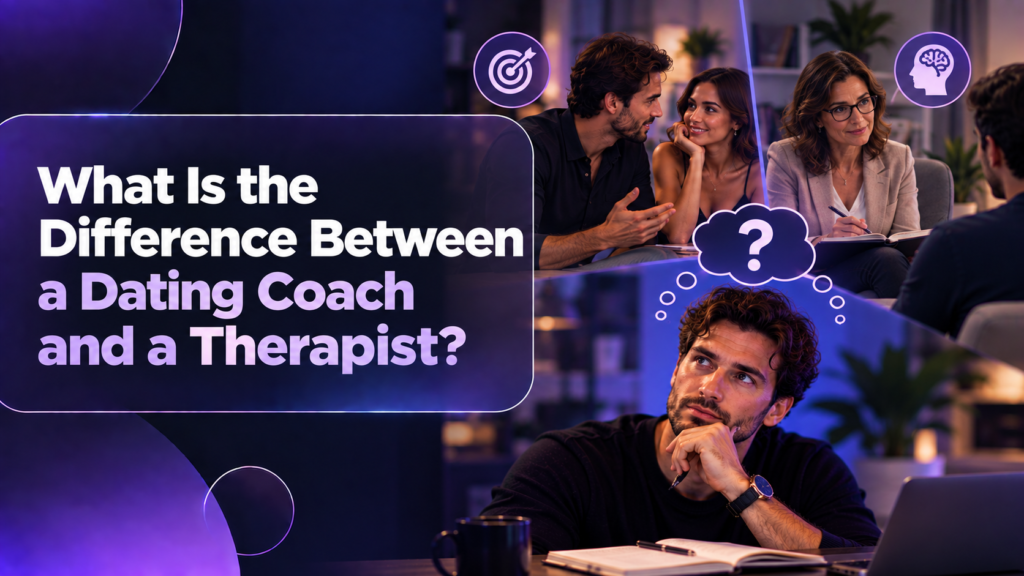
Both can help you grow, but in very different ways. The key is understanding what each one does, how they work, and what kind of support they offer. Let’s look at the differences between a dating coach and a therapist so you can choose the right guide for where you are right now.
Understanding the Roles
What Is a Dating Coach?

A dating coach is practical and forward-focused. They work on your romantic life as it is right now, not your entire emotional history. Think of them as someone standing at the edge of the dating world with a lantern, showing you where the stepping stones are.
A dating coach typically helps with:
- Building confidence
- Understanding modern dating etiquette
- Improving conversation skills
- Creating dating app profiles
- Handling first dates
- Breaking old dating habits
- Spotting compatibility early
- Presenting yourself more authentically
Their work centers on strategy, communication, and social skills. It’s action-oriented and often moves quickly, a lot like having a personal trainer for your love life.
One thing I’ve seen again and again is that people think they’re “bad at dating” when what they really need is some clarity, structure, and fine-tuning. A good dating coach gives them that.
What Is a Therapist?
A therapist specializes in emotional depth: your past, any trauma, your mental patterns, and the roots of what you’re struggling with. Where a dating coach helps you move forward, a therapist helps you look inward.
Therapists work with mental and emotional health, including anxiety, depression, trauma, and relationship wounds. They help you understand your attachment style and the behavioral patterns that affect your relationships. They also help you heal from past experiences, build coping skills, become more self-aware, and work through conflict or unresolved emotions.
Therapy is about healing, processing, and understanding why you act the way you do.
If dating feels overwhelming because of deeper emotional struggles, therapy gives you the foundation you need before you jump back into romance.
Key Differences Between a Dating Coach and a Therapist

Here’s a clearer breakdown.
1. The Focus of Their Work
A dating coach focuses on your current dating life: your mindset around attraction, your habits, and your social skills.
A therapist focuses on your emotional history, your mental health, unresolved trauma, and the internal patterns that shape how you relate to other people.
Both are valuable, but they look at your life through completely different lenses.
2. Methods and Techniques
Dating coach techniques are practical. Expect advice you can use right away, role-playing conversations, communication training, confidence-building exercises, and real-world homework like starting conversations or refining your profile. You’ll usually leave with an action plan and specific behaviors to adjust.
Dating coaches lean toward a “let’s get you moving” approach.
Therapist techniques include cognitive behavioral therapy (CBT), talk therapy, trauma processing, mindfulness and grounding, exploring emotional patterns, and attachment theory work, all aimed at long-term healing.
Therapists help you understand the why behind your emotions and choices.
3. How Long You Work Together

Dating coaching is often short-term. You might work together for a few weeks or a few months, or until you reach a specific dating goal.
Therapy tends to be longer-term. It can last several months, several years, or for as long as you need ongoing emotional support.
Dating coaching is about progress. Therapy is about healing.
4. Who They Help
A dating coach is for people who want to improve their dating skills, build confidence, meet new people, make better first impressions, break unhelpful dating patterns, or start dating again after a breakup or a long break.
A therapist is for people who need help with emotional trauma, anxiety or depression, low self-worth, attachment struggles, relationship pain, family-of-origin issues, or other mental health challenges.
If what you’re dealing with feels emotional, heavy, or deeply rooted, therapy is the right path. If it feels logistical, social, or practical, a dating coach is probably the better fit.
When to Choose a Dating Coach
A dating coach is a great choice if you’re:
- Feeling stuck in your dating life
- Unsure how to attract the kind of partner you want
- Struggling with first dates or conversations
- Feeling rusty after a long break
- Wanting to get better at flirting or communicating
- Lacking confidence or direction
- Frustrated with dating apps
A dating coach helps you move forward with more clarity and confidence. They won’t dig into your childhood. They’ll help you get back into the dating world with a clear purpose.
When to Choose a Therapist

A therapist is the right choice if you’re dealing with:
- Trauma from past relationships
- Unhealthy relationship patterns you keep repeating
- Anxiety or fear around dating
- Low self-esteem that affects your relationships
- Emotional triggers or unresolved pain
- Trouble trusting or connecting with people
- Fear of abandonment or intense sensitivity to rejection
Therapy creates a sense of emotional safety, so dating doesn’t feel like walking on broken glass.
Where Dating Coaches and Therapists Overlap
They play different roles, but both want to help you build a healthier, more fulfilling love life. Some people even work with both: a therapist for healing and self-understanding, and a dating coach for practical skills and real-world action.
Done thoughtfully, that can be a powerful combination.
Conclusion
Choosing between a dating coach and a therapist isn’t about which one is “better.” It’s about what you need at this point in your life.
If you’re ready to start dating again and want guidance, strategy, and more confidence, a dating coach is likely the right fit. If you’re working through heavy emotions, trauma, or long-standing patterns, a therapist is the better place to start.
You don’t have to figure out love on your own. Whether you want practical dating help or emotional healing, the right guide can change the direction of your relationships.
So take the first step, whether that’s booking a coaching consultation or a therapy session. The sooner you reach out, the sooner you can build a love life that feels grounded, healthy, and real.
Need Help Getting More Clients?
ST Media helps coaches grow with websites, SEO, social media, and ads that bring in the right clients. Book a free call and let’s map out your next step.